
July 21, 2026 · Amy Kernahan
Soy vs. Paraffin Candles: Why Soy Wax Is Worth Every Penny
By: Amy Kernahan
That Candle on Your Coffee Table Might Be Burning Petroleum
Here's something most people don't think about: paraffin wax is a byproduct of petroleum refining, the same industrial process that produces gasoline and diesel fuel. Over 65% of households purchase candles for home ambiance and wellness, but few pause to consider what's actually in the wax they're burning.
Soy wax offers a plant-based alternative. It was developed in the 1990s by Indiana candle maker Michael Richards, who set out to create a renewable option that didn't rely on fossil fuels. Since then, soy has grown into a dominant force in the premium candle market.
This is a practical, science-backed guide to help you make a smarter choice. We'll cover burn time, indoor air quality, environmental footprint, and real value for your dollar.
What Is Paraffin Wax, and Why Does It Matter?
Paraffin wax starts its life in a petroleum refinery. It's a solid byproduct left over after crude oil is processed into gasoline, diesel, and other fuels. That origin matters because of what happens when you light the wick.
When paraffin burns, it can release volatile organic compounds (VOCs) including benzene, toluene, formaldehyde, and acetaldehyde. Some of these are recognized carcinogens also found in diesel exhaust. A 2005 study from the University of South Florida found that paraffin candles emit low levels of benzene even when unlit. A 2015 study simulating indoor candle use found that a lit strawberry-scented paraffin candle produced formaldehyde concentrations of 2,098 parts per billion, according to CNN Health.
Some nuance is important here. A comprehensive 2007 emissions study by Ökometric tested candles made from paraffin, soy, stearin, and palm wax under controlled conditions. The finding: all major wax types produced emissions within established indoor air quality standards when properly made and burned. Fragrance quality and ventilation matter enormously.
That said, paraffin candles do produce significantly more black soot than their soy counterparts. That soot can stain walls, ceilings, and furniture, and it poses respiratory risks, particularly for children, the elderly, and those with asthma, as noted by Pure Integrity. Paraffin is also not biodegradable, and if you've ever spilled paraffin wax on a tablecloth, you know that cleanup is a nightmare.
What Makes Soy Wax Different?
Soy wax is derived from hydrogenated soybean oil, a renewable, plant-based, and fully biodegradable resource. Its production supports domestic agricultural sectors rather than fossil fuel extraction industries, as highlighted by FjordLume. Soy wax is also 100% vegan and cruelty-free by nature.
On the practical side, soy wax spills clean up easily with soap and water. If you've ever dealt with a paraffin spill on fabric or carpet, you'll appreciate how much that matters.
One thing that sometimes catches new soy candle buyers off guard is "frosting," a white crystalline coating that can appear on the wax surface. This is a completely natural characteristic of pure soy wax and doesn't affect performance or safety. It's actually a sign that you're getting real soy content, not a paraffin blend disguised with a "soy" label.
Soy's reputation has reached the highest tiers of the candle world. In May 2025, Diptyque Paris introduced a sustainable collection featuring 100% soy wax and FSC-certified packaging. According to Grand View Research, soy wax candles held 42.8% of the luxury candle market in 2025, the largest share of any wax type in that segment.
The Burn Time Math: Why Soy Is Actually the Better Deal
We hear it often: "Soy candles cost more." And yes, the sticker price can be a few dollars higher. But the math tells a different story once you factor in how long each candle actually lasts.
Soy wax burns at approximately 4 grams per hour compared to paraffin's 5 grams per hour. That means a soy candle lasts 30 to 50% longer than a paraffin candle of the same size, according to Hywax. A $28 soy candle that burns for 60 hours costs about $0.47 per hour. A $20 paraffin candle that burns for 40 hours costs $0.50 per hour. The soy candle wins on a per-hour basis.
Then consider the hidden costs of paraffin: soot buildup on walls and ceilings (and the cleaning that comes with it), more frequent candle replacements, and potential respiratory irritation. When you add it all up, soy wax is the affordable luxury choice — quality that pays for itself over time.
That's exactly the philosophy behind every candle we hand-pour in small batches at our studio in Milford, PA. High-end quality at an accessible price point, because you shouldn't have to choose between what's good and what's affordable.
Does Soy Wax Really Smell as Good as Paraffin?
This is the objection we hear most: "Soy candles don't throw scent as well." A few years ago, there was some truth to it. Not anymore.
Modern soy wax formulations have significantly closed the scent throw gap. Quality soy candles use a fragrance load of 8 to 12% fragrance oil by weight, which produces strong, complex cold and hot throw, as noted by You Me and Emilio.
The real variable isn't the wax type; it's the fragrance quality. A 2025 study published in Frontiers in Public Health confirmed that fragrance quality and ventilation are the key variables for indoor air safety when burning candles. Phthalate-free, high-quality fragrance oils in a well-formulated soy base perform as well as, or better than, paraffin alternatives.
At Boujie Candle Company, our unique, complex fragrance blends are crafted from high-quality ingredients specifically chosen to perform beautifully in 100% natural soy wax. Every scent is tested and refined until the throw fills a room the way it should.
How to Burn Any Candle More Safely at Home
Regardless of wax type, these habits make a real difference:
- Trim your wick to 1/4 inch before every burn. This reduces soot and promotes an even flame.
- Burn in a well-ventilated room. The 2007 Ökometric study confirmed ventilation is one of the most important factors for indoor air quality when burning candles.
- Limit burn sessions to 3 to 4 hours at a time.
- Keep candles away from drafts, which cause uneven burns and increase soot production.
- Read the label carefully. Look for phthalate-free fragrance oils, cotton or wood wicks, and no synthetic dyes.
- Watch out for "soy blend" candles that may contain paraffin. Look for "100% soy wax" on the label to confirm you're getting the real thing.
Why Soy Candles Make a More Thoughtful Gift
Most articles about soy vs. paraffin skip the gifting angle entirely, which is a missed opportunity. The candle you give someone says something about you.
A soy candle gift signals health-consciousness, eco-awareness, and a sense of taste that goes beyond grabbing something off a big-box store shelf. With soy wax holding 42.8% of the luxury candle market, choosing soy puts you in the company of premium brands worldwide. According to Grand Research Store, Millennial and Gen Z consumers show a stronger willingness to pay a premium for sustainable goods, so a soy candle aligns with the values of the people most likely to receive and appreciate your gift.
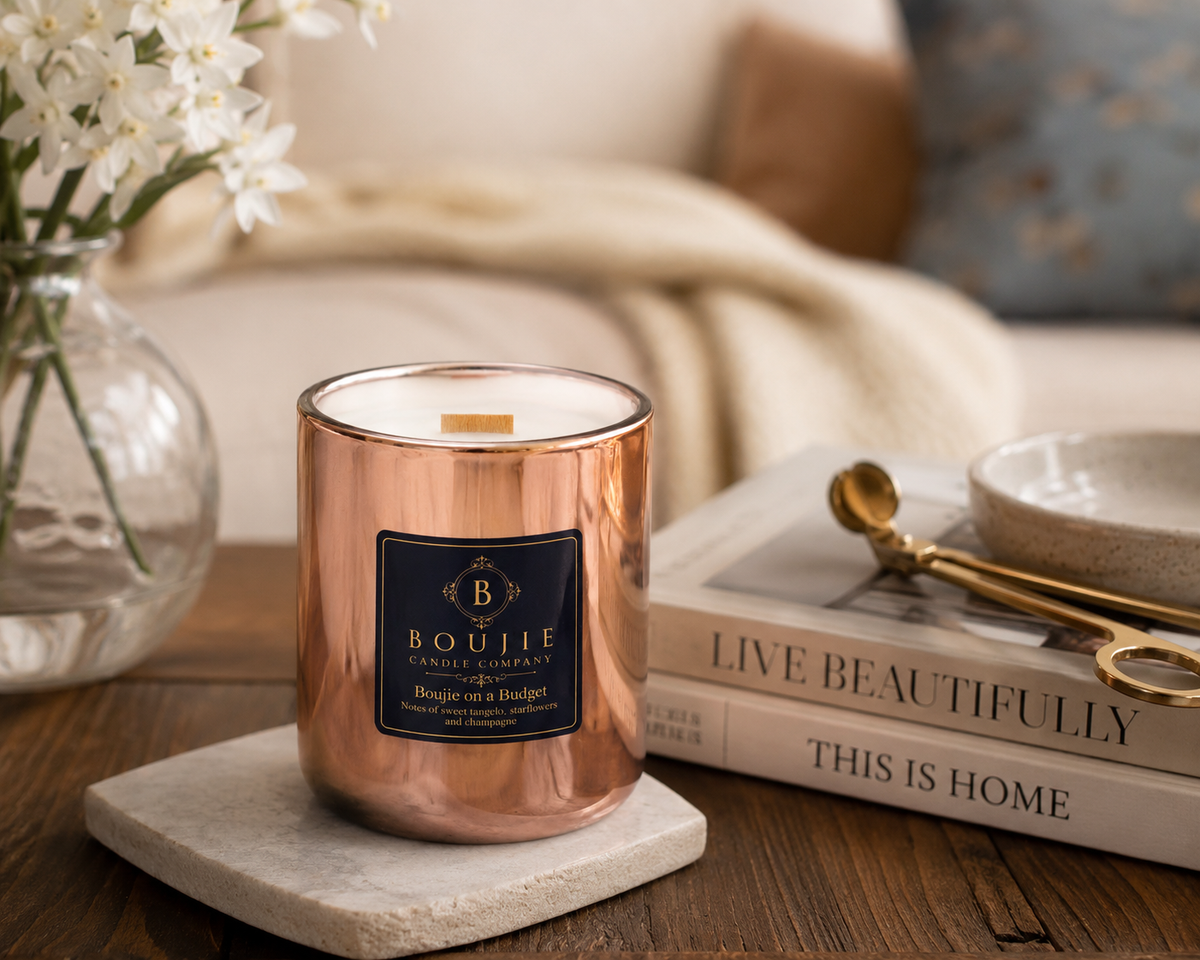
Boujie Candle Company candles check every box for a thoughtful present: hand-poured in the Pocono Mountains, small-batch, 100% natural soy wax, vegan, cruelty-free, and wrapped in eco-friendly packaging. They're perfect for birthdays, anniversaries, housewarmings, or a simple "thinking of you" moment. With free shipping on orders over $100, it's easy to stock up for every occasion on your calendar.
The Bottom Line: Small Choice, Big Difference
Soy wax is renewable, biodegradable, lower in soot, longer-burning, and better value per hour. It's vegan, cruelty-free, and supports agriculture instead of petroleum extraction. Those are genuine, measurable advantages.
We also believe in being honest: fragrance quality and ventilation matter just as much as wax type. Choosing a well-made soy candle with high-quality fragrance oils is the full picture.
That's exactly what we pour into every candle at Boujie Candle Company. We're a family-run, small-batch brand in Milford, PA, and every detail (from the soy wax to the fragrance blend to the eco-friendly packaging) is intentional. We'd love for you to experience the difference for yourself. Browse our soy candle collection, or pick one up as your next gift for someone who deserves something a little special.
Sources
- Business Research Insights – Candle Market
- IQAir – The Hidden Dangers of Scented Candles
- CNN Health – Are Scented Candles Bad for You?
- Sero Candles – Soy Wax vs. Paraffin
- Pure Integrity – Soy vs. Paraffin Candles
- FjordLume – Soy vs. Paraffin Environmental Impact
- Technavio – Candle Market Analysis
- Grand View Research – Luxury Candle Market Report
- Hywax – Paraffin Wax vs. Soy Wax
- You Me and Emilio – Soy Candles vs. Paraffin Complete Guide
- Grand Research Store – Eco-Friendly Candles Market Report